
Serving Church Hill, TN & the Tri-Cities Mon–Fri 8–5 · Emergency service available (423) 357-1922
Custom Heating & Air Conditioning logo Heating & Air ConditioningChurch Hill, TN · Since 2001
Product knowledge

The basics, in plain English

You do not need to be a technician to make good decisions about your comfort system. You do need to know roughly what it is doing and why. Here is the useful part.

01

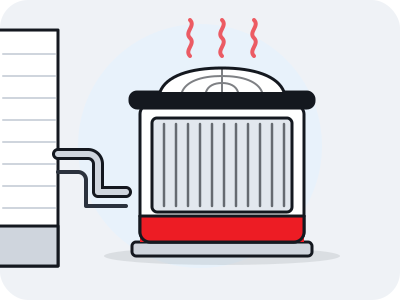
How air conditioning works

An air conditioner does not make cold. It moves heat out of your house and releases it outside, using refrigerant that boils at a low temperature. Everything else — the compressor, the two coils, the fans — exists to keep that cycle going in one direction.
02

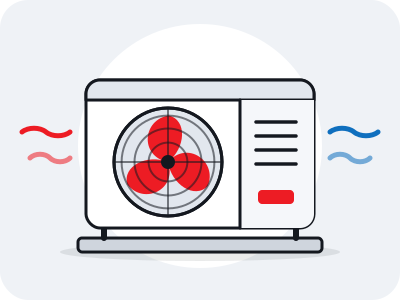
Why a heat pump can heat with cold air

There is usable heat in air well below freezing. A heat pump runs the air conditioning cycle backwards to gather it and move it indoors. Because it moves heat rather than creating it, it delivers more energy into your house than it consumes.

03

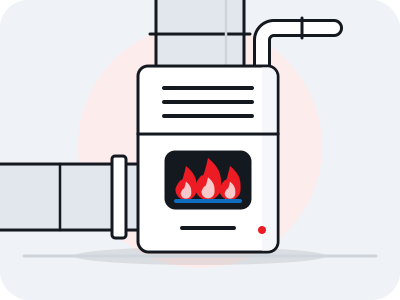
What happens when your furnace fires

A call for heat starts a strict safety sequence: the inducer clears the flue, a pressure switch confirms it, the igniter glows, gas opens, and a flame sensor proves the flame within seconds. If any step fails to confirm, the furnace shuts down rather than continuing.

  1. Inducer
  2. Pressure switch
  3. Igniter
  4. Gas valve
  5. Flame sensor
Why it matters

What decides how well it runs

04

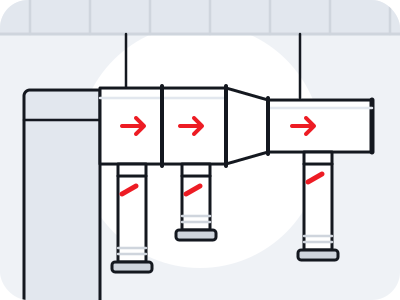
Why airflow matters more than people think

Equipment is rated at a specific airflow. Restrict it with a blocked filter, closed vents or crushed ductwork and the whole system suffers — poor efficiency, iced coils in summer, limit trips in winter, and a shorter life for the expensive components.

74°FDamp air
vs
78°FDry air
05

Humidity, and why 78°F can beat 74°F

Moisture in the air changes how a temperature feels. Dry air at 78°F is more comfortable than damp air at 74°F, and cheaper to produce. This is why a properly sized system that runs long gentle cycles beats an oversized one that runs in short, hard bursts.

  • Superheat and subcooling
  • Capacitor microfarads
  • Motor amp draw
  • Temperature rise
  • Static pressure
06

What a maintenance visit should measure

A maintenance visit should be more than a wipe-down. It checks refrigerant charge against superheat and subcooling, capacitor microfarads against rating, motor amp draw against nameplate, temperature rise against specification, and static pressure across the system. The readings are written down, so drift shows up before anything fails.

Questions

Have a question about your system?

We are glad to explain how your equipment works, what a reading means or what a noise might be. Send us a question, or look up a term in the glossary.

Still have a question?

We would rather explain it than leave you guessing.

(423) 357-1922
Call Now Request Service